What is Flyball?
Flyball is a fun sport for both dogs and handlers which builds on their bond and provides a physical and mental challenge for the dog. Once a dog is fully trained and participating as a team member, it’s so satisfying to see the dogs (and owners) working closely within the team unit.
Ultimately Flyball is Team Work between a handler and their dog and between all members within a team.
How do you do it?
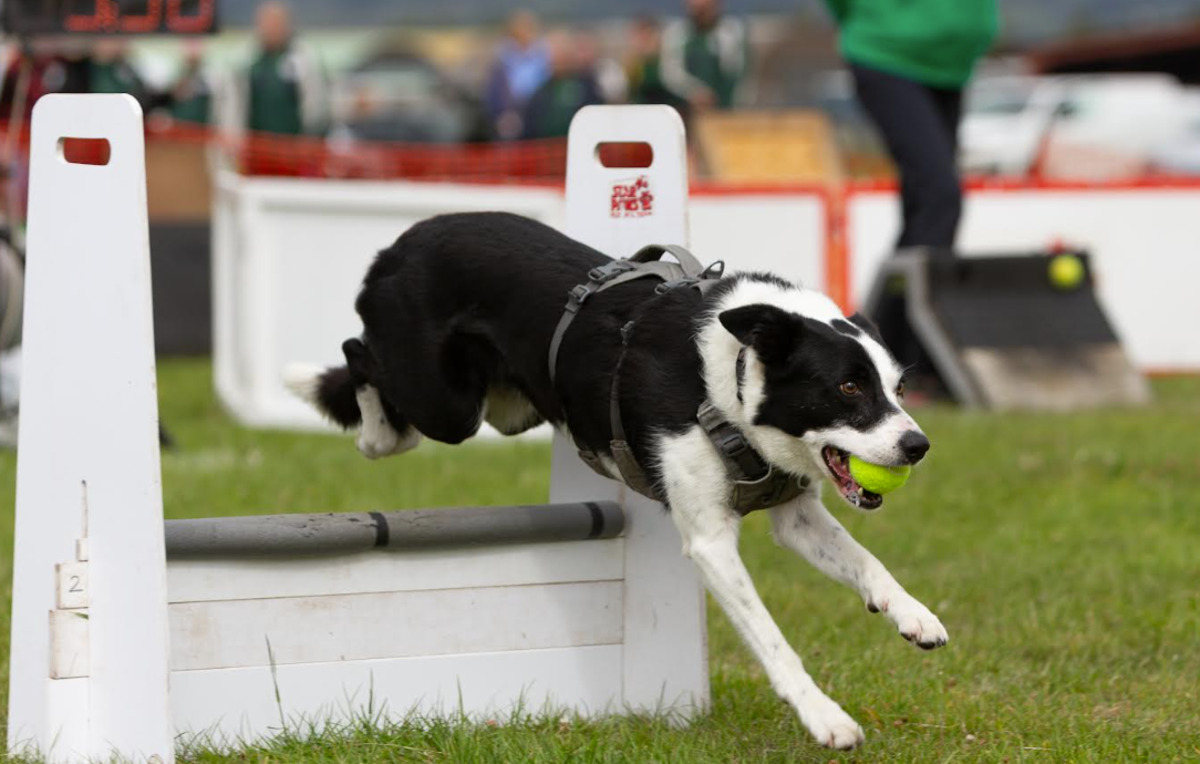
Flyball is a relay race with a team of 4 dogs, each of whom is required to clear a set of 4 hurdles, retrieve a ball from a special box, and then return with the ball over the hurdles to their respective handler. Each handler must release their dog at the right time so there is only 1 dog on the course at any point in time. There is a degree of practice, skill and timing required from both the team members and their dogs to complete the course successfully and gain an accredited time. In competition, teams will race in 2 separate lanes, so the dogs need to be trained to remain in their own lane at all times.
Who can do it?
A variety of dog breeds can enjoy Flyball, including a smaller dog breeds (e.g. Jack Russell or Terrier). In Flyball the hurdle size is reduced to accommodate the smallest dog on the team. This can be also be a benefit for the team as a whole. Currently Deesidedly Flyball has a wide variety of dog breeds in the various teams including Collies, Golden Retrievers, Spaniels, Terriers and Jack Russells. Some of the dogs have been rescued and have had several owners, but they all enjoy Flyball.
What does training involve?
Training each dog to be able to participate in a Flyball competition takes time and patience. Deesidedly train weekly throughout the year, indoors at Belwade Farm, Aboyne in the winter months and outdoors at Bellfield Park, Banchory in the summer months. Training may begin as basic socialisation with other dogs and owners but the flyball basics include building up confidence and skills including speed across the hurdles, safely turning on the box, collecting the ball, and retaining it across the full length of the course, and crossing over (passing) with other dogs. The pace of training is tailored to meet the needs of individual dogs and owners.
Why do we do it?
Both handlers and dogs learn to appreciate the excitement from competing at Flyball training and events. It’s great to see the build-up and anticipation of a flyball dog when approaching either the training venue or the competition arena – they know what is coming up and they cannot get there fast enough!